The world’s most extraordinary wildlife experiences do more than take your breath away. They invite you to witness nature on its own terms, to move through landscapes shaped by millions of years of evolution, and to leave them exactly as you found them. The animals you encounter on these journeys are not a backdrop. They are the reason these places exist at all.
Responsible wildlife tourism begins with a simple understanding: we are guests. The way we travel, the operators we choose, the distance we keep, and the money we spend all have consequences. When tourism is thoughtfully designed, it becomes one of the most powerful forces for conservation on the planet, generating the funding, the attention, and the political will that governments and local communities need to protect wild spaces for generations to come. When it is not, the opposite is true.
The experiences below were selected not only for their wonder, but for the integrity of the organizations and ecosystems behind them. At each destination, we have highlighted a foundation or initiative actively working to protect the wildlife you will encounter. We encourage every traveler to learn more, give generously, and carry that commitment home.
COLOMBIAN AMAZON, LETICIA
The Maikuchiga Foundation
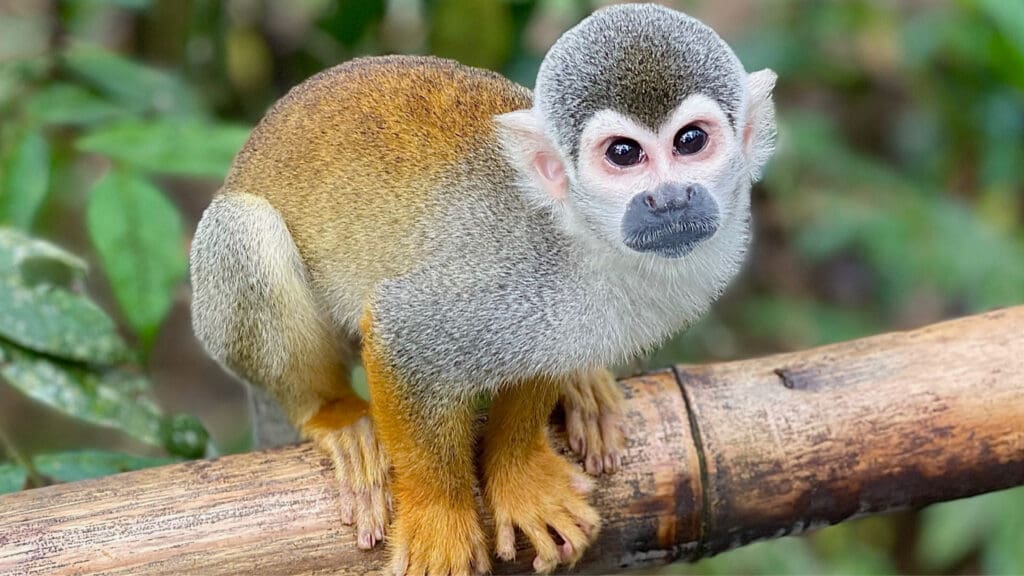
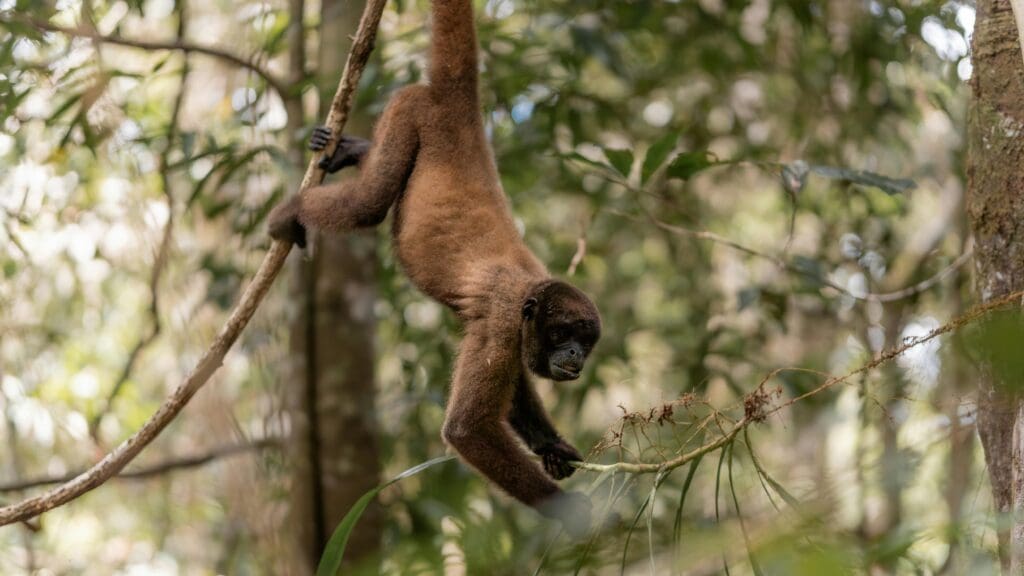
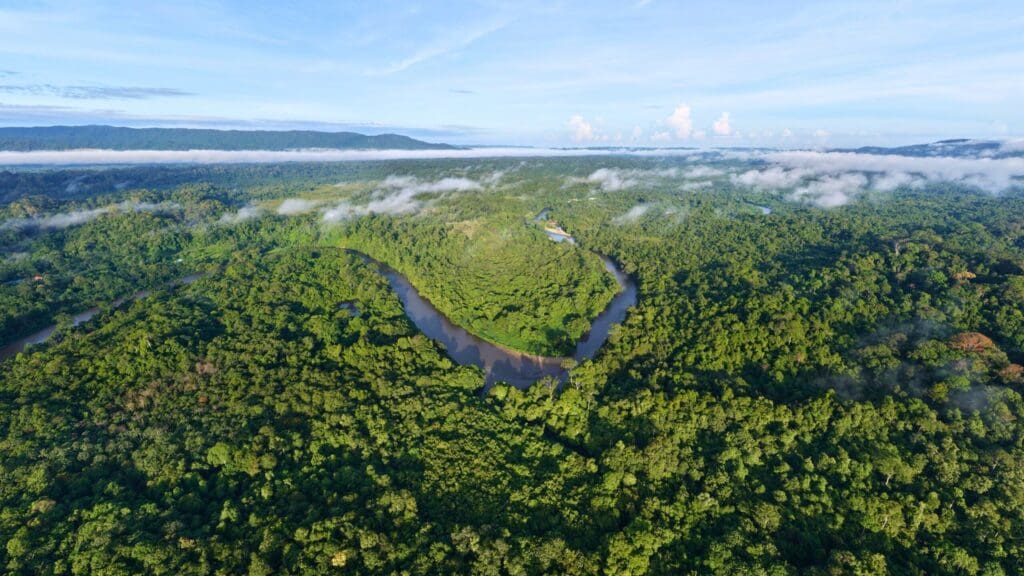
Deep in the Colombian Amazon near the city of Leticia, where the river bends and the forest closes in on all sides, the Maikuchiga Reserve offers something genuinely rare: the chance to observe wild woolly monkeys, spider monkeys, and other primates in their natural habitat, unhurried and unbothered by human presence. What makes this experience unlike anything else is its origin.
Deep in the Colombian Amazon, where the river bends and the forest closes in on all sides, the Maikuchiga Reserve offers something genuinely rare: the chance to observe wild woolly monkeys, spider monkeys, and other primates in their natural habitat, unhurried and unbothered by human presence. What makes this experience unlike anything else is its origin.
Maikuchiga was built as a rehabilitation and release center first, meaning every animal you encounter here has been given a second chance at wild life. Tourism is not the primary purpose; it is the funding mechanism for conservation work already in progress. Visitor numbers are deliberately limited, guides are deeply trained in ethical wildlife interaction, and the reserve operates in close partnership with local Indigenous communities who have been its most important stewards long before it had a name.
Woolly monkeys are critical seed dispersers: a single troop can scatter thousands of seeds across the forest floor each day, making them architects of the very ecosystem they call home.
Supporting the work:
The Maikuchiga Foundation manages the reserve and leads conservation, research, and community education efforts throughout the Colombian Amazon. Their work protects not just primates but the broader rainforest ecosystem that depends on them.
KALIMANTAN,BORNEO
Among the Orangutans
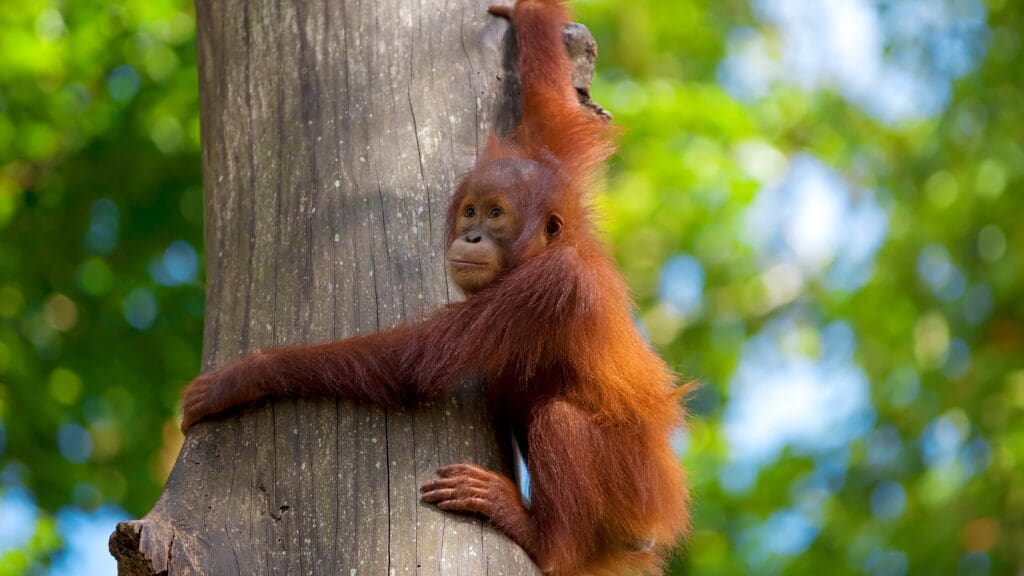
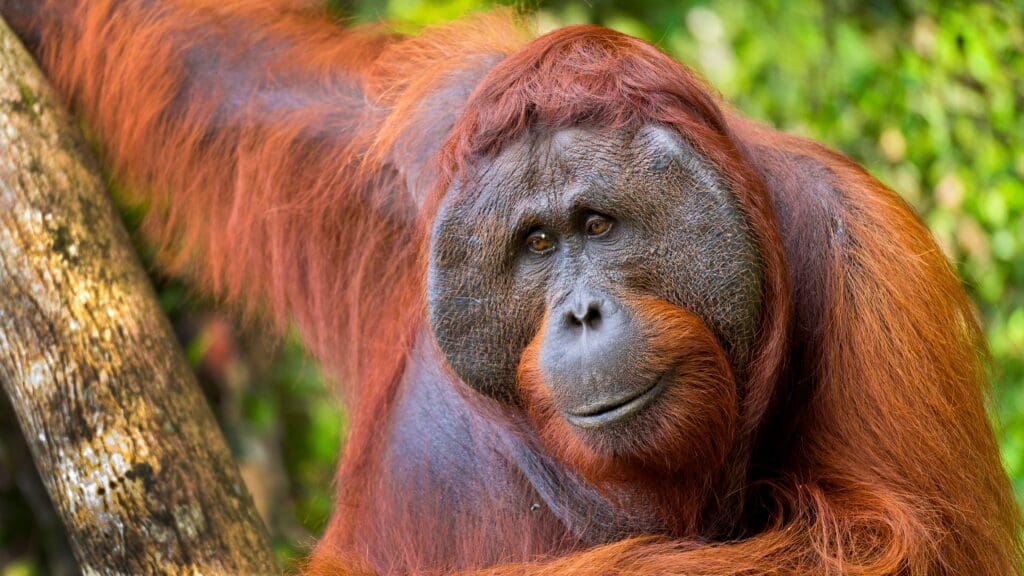
Borneo is one of the only places on Earth where you can encounter wild orangutans, and standing beneath the forest canopy while one moves silently overhead is an experience that stays with you for life. They are the largest tree-dwelling mammals on Earth, and they are exclusively Asian, making them unlike any of Africa’s great apes.
Borneo is one of the only places on Earth where you can encounter wild orangutans, and standing beneath the forest canopy while one moves silently overhead is an experience that stays with you for life. They are the largest tree-dwelling mammals on Earth, and they are exclusively Asian, making them unlike any of Africa’s great apes.
Responsible operators in Borneo keep groups small, limit time in the forest, and work with guides who have spent years learning to read this landscape without disturbing it. Since 2012, rehabilitation programs have returned over 1,200 orangutans to the wild, a number that grows each year because of ethical tourism revenue.
Orangutans share approximately 97% of their DNA with humans. They are also one of the only non-human animals known to self-medicate, applying chewed plant material to sore joints.
Supporting the work:
The Borneo Orangutan Survival (BOS) Foundation, established in 1991, is the world’s largest orangutan conservation organization. Through two rehabilitation centers in Kalimantan, BOS rescues, rehabilitates, and releases orangutans back into protected forest, and works to ensure that forests are still standing to receive them.
OAHU, HAWAII
Swim with Sharks
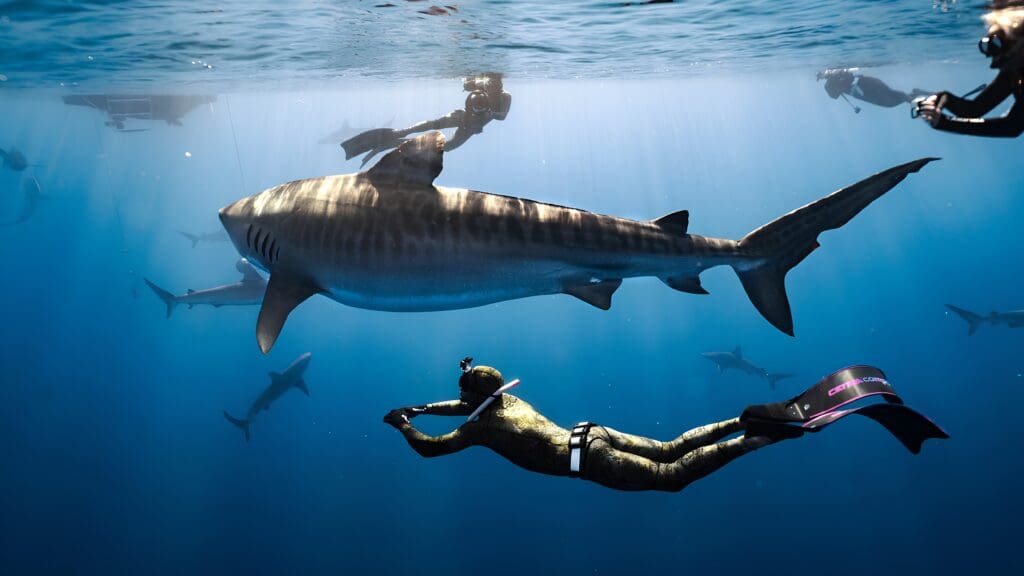
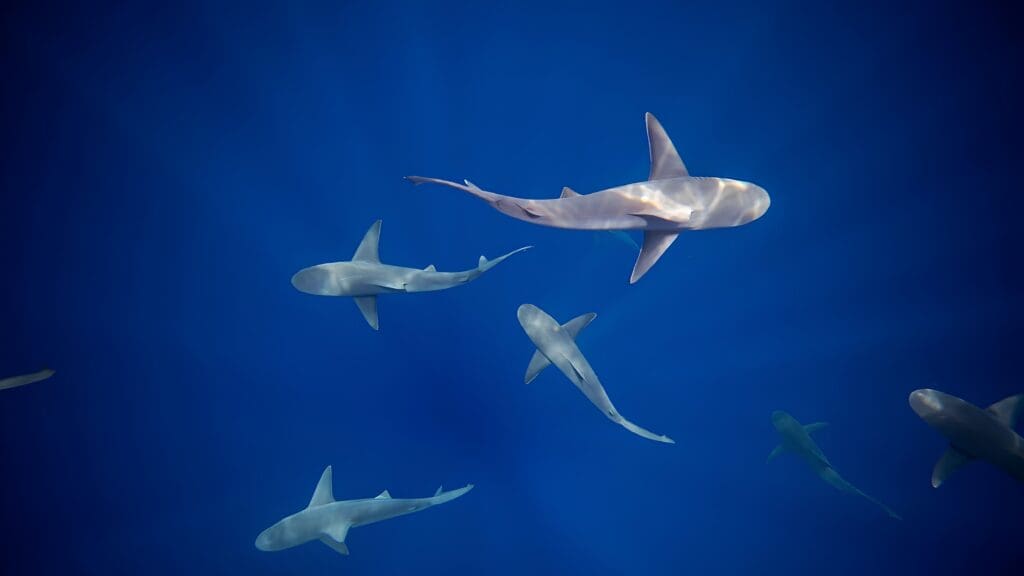
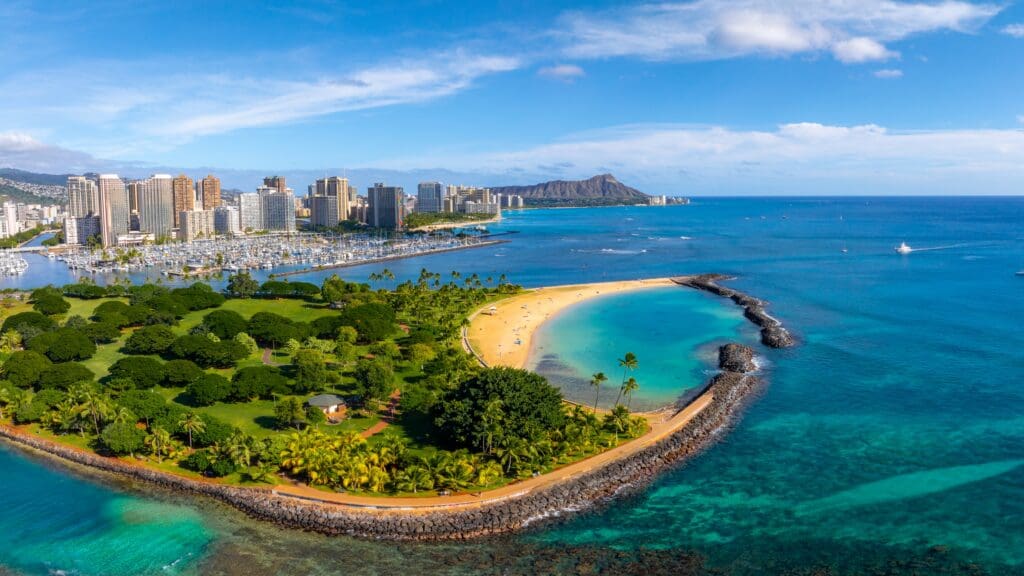
Off the North Shore of Oahu, in open ocean, you can slip beneath the surface and find yourself surrounded by sharks, sandbars, tigers, and others, with Galapagos sharks the most abundant of them all. No cage. No barrier. No bait, no blood, no chumming the water. What makes this experience extraordinary is precisely what is absent: the sharks come because this is their territory and they are curious, not because they have been lured.
Off the North Shore of Oahu, in open ocean, you can slip beneath the surface and find yourself surrounded by sharks, sandbars, tigers, and others, with Galapagos sharks the most abundant of them all. No cage. No barrier. No bait, no blood, no chumming the water. What makes this experience extraordinary is precisely what is absent: the sharks come because this is their territory and they are curious, not because they have been lured.
Guides enter the water before guests and exit last, remaining between the group and the sharks at all times. Encounters are passive and non-invasive, guided by the same principles marine biologists use in field research. The philosophy is simple: when people meet sharks in their natural environment without artificial stimulation, fear dissolves. What replaces it is respect. Every dive funds ongoing shark research, reef cleanups, and marine debris removal. Guests who have swum with these animals on an ethical tour have become among the most vocal supporters of shark protection legislation.
Sharks have roamed the Earth for over 450 million years, predating the dinosaurs by more than 200 million years.
Supporting the work:
One Ocean Organization, the conservation arm of One Ocean Diving, spearheaded a seven-year campaign that led to the passage of Hawaii’s HB553 in 2021, banning the intentional killing of sharks and rays in state waters. Hawaii Shark Encounters also operates ethical cage-based tours off the North Shore with a no-bait, no-chum policy and an educational focus on dispelling myths about these essential marine predators.
RWANDA, AFRICA
Gorilla Trekking in Volcanoes National Park
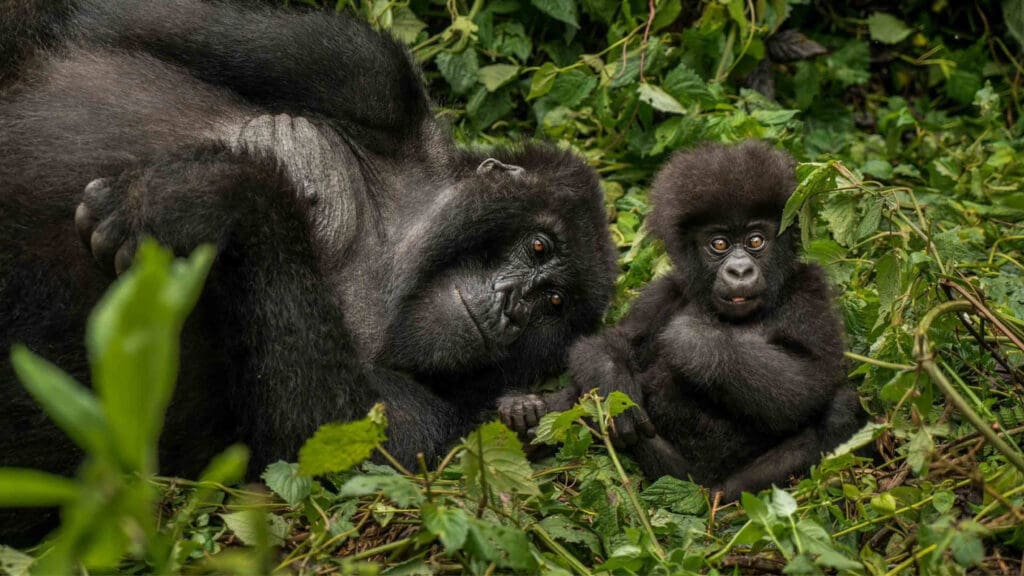
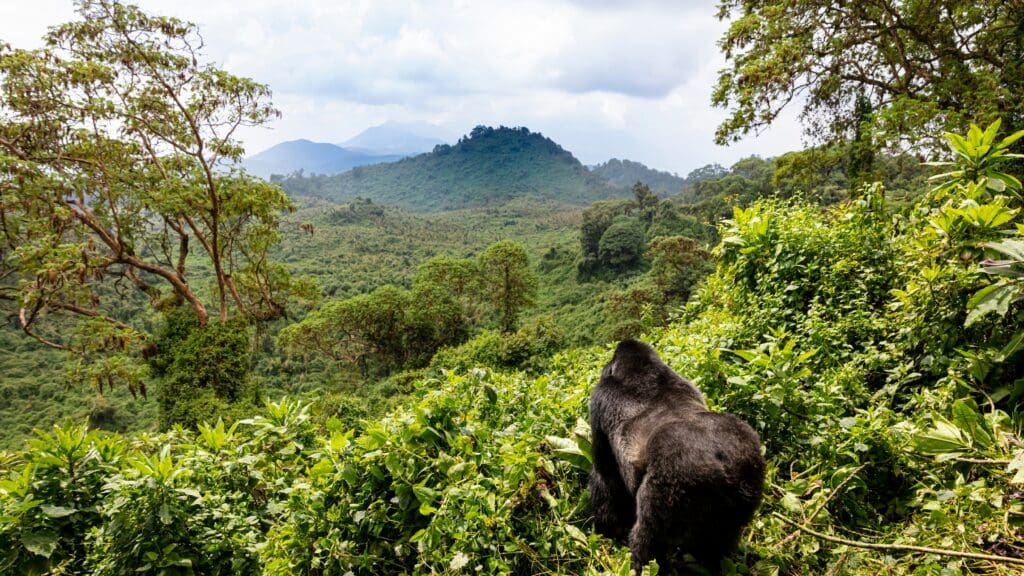
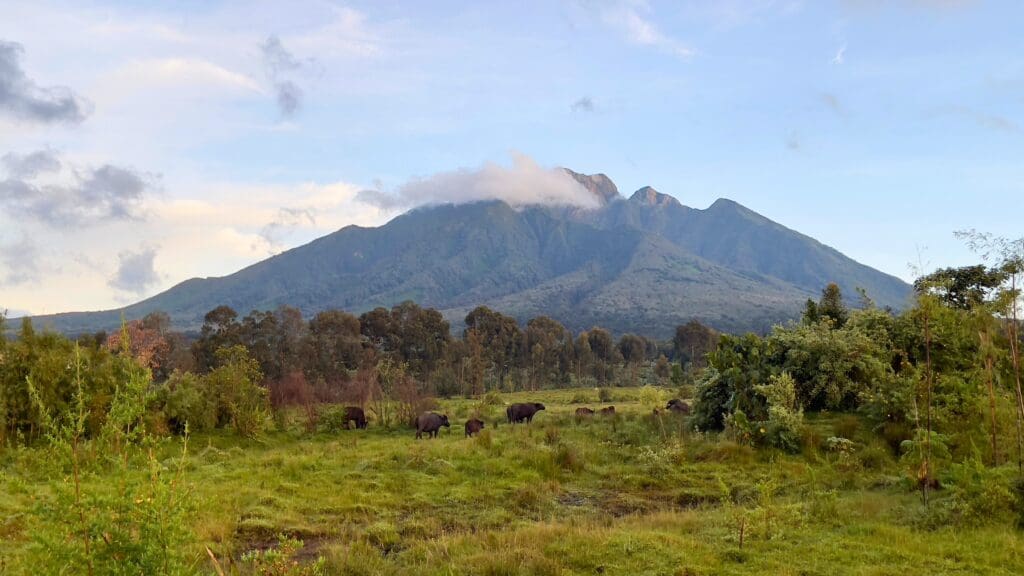
There are roughly 1,063 mountain gorillas left in the world. All of them live in a narrow band of forest spanning Rwanda, Uganda, and the Democratic Republic of Congo. To trek into Rwanda’s Volcanoes National Park at dawn, following a ranger through mist and mud until you come face to face with a family group, is to understand immediately why protecting this species matters and how close it came to being lost.
There are roughly 1,063 mountain gorillas left in the world. All of them live in a narrow band of forest spanning Rwanda, Uganda, and the Democratic Republic of Congo. To trek into Rwanda’s Volcanoes National Park at dawn, following a ranger through mist and mud until you come face to face with a family group, is to understand immediately why protecting this species matters and how close it came to being lost.
In the 1980s, the global population had plummeted to fewer than 250 individuals. Today, thanks to decades of sustained conservation, that number has grown by more than 73%, and mountain gorillas have been reclassified from critically endangered to endangered, one of the only large mammals in history to move in that direction. Rwanda’s trekking program is widely considered the gold standard in responsible wildlife tourism. Only 96 permits are issued per day across 12 habituated family groups, with a strict maximum of 8 visitors per group. Guests spend no more than one hour with the gorillas. Ten percent of every permit fee is invested directly into local communities, funding schools and health clinics, which has transformed many former poachers into passionate wildlife protectors.
Mountain gorillas have unique nose prints which researchers use to identify individuals.
Supporting the work:
The Dian Fossey Gorilla Fund has protected mountain gorillas in Rwanda since 1967. Their Ellen DeGeneres Campus near Volcanoes National Park serves as a world-class center for research, community engagement, and the daily monitoring work that is a primary reason this species is still here.
RAJA AMPAT, INDONESIA
Dive with Manta Rays
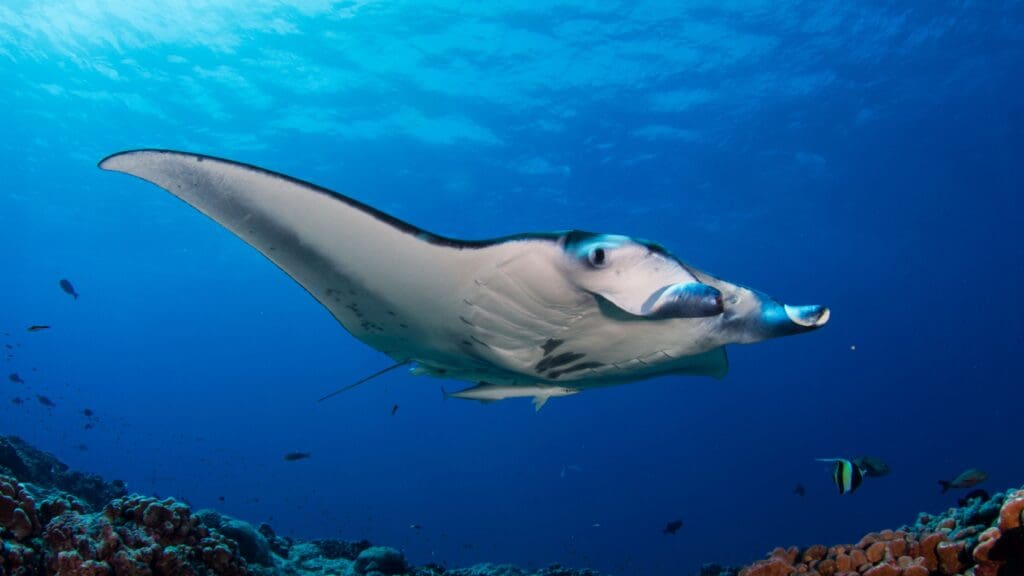
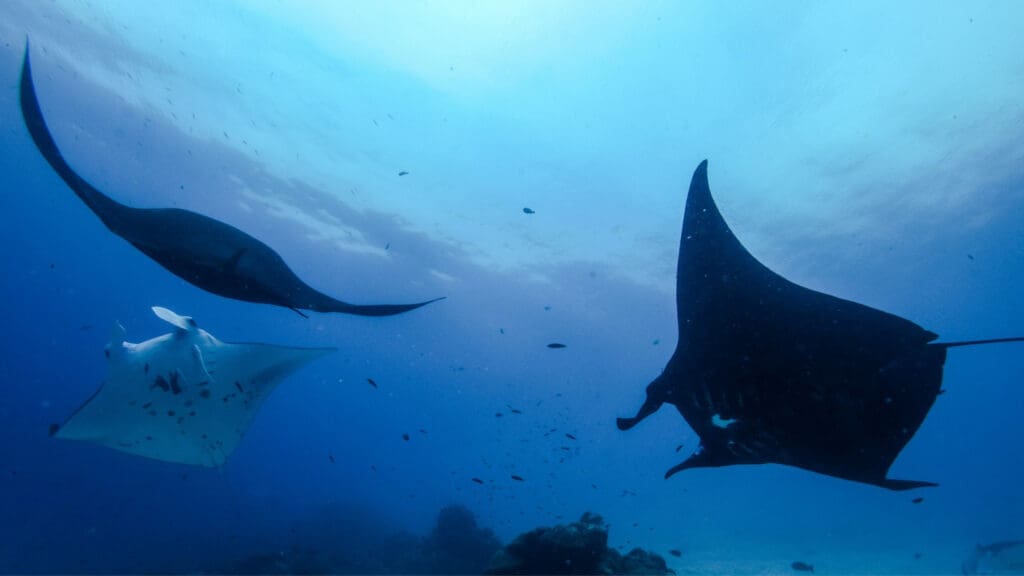
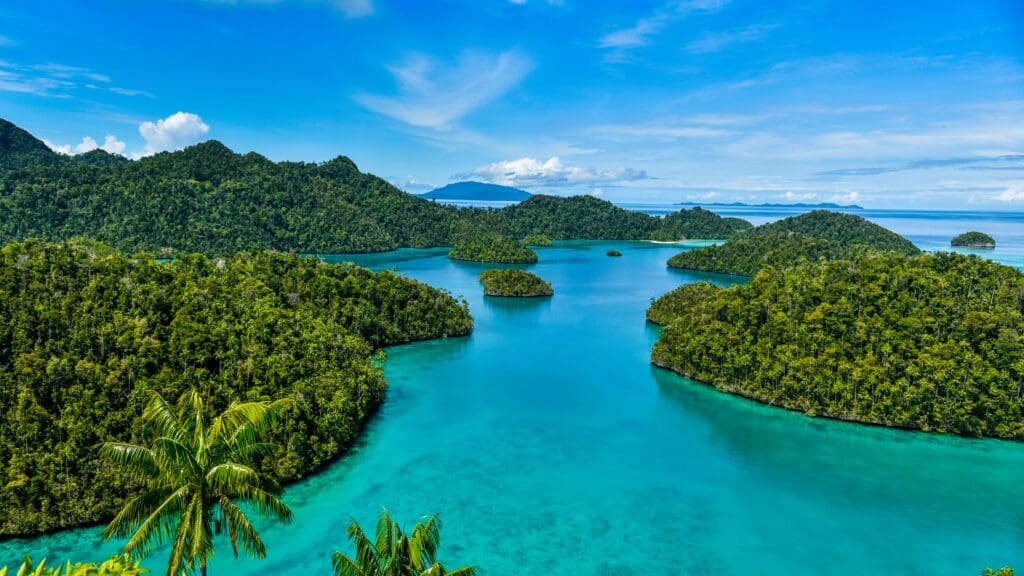
Raja Ampat sits at the intersection of the Pacific and Indian Oceans in a region known as the Coral Triangle in Eastern Indonesia, and the biodiversity beneath its surface is the richest on the planet. Scientists have recorded more than 1,500 species of fish and 600 species of coral here, numbers that dwarf every other marine ecosystem on Earth. The water is strikingly clear and unpolluted, and the remoteness of the archipelago has kept it that way. Descending on a manta cleaning station at a site like Manta Sandy or Manta Ridge, where reef mantas hover in slow, graceful arcs while cleaner fish work over their wings, is one of the most meditative experiences in the natural world.
Raja Ampat sits at the intersection of the Pacific and Indian Oceans in a region known as the Coral Triangle, and the biodiversity beneath its surface is the richest on the planet. Scientists have recorded more than 1,500 species of fish and 600 species of coral here, numbers that dwarf every other marine ecosystem on Earth. The water is strikingly clear and unpolluted, and the remoteness of the archipelago has kept it that way. Descending on a manta cleaning station at a site like Manta Sandy or Manta Ridge, where reef mantas hover in slow, graceful arcs while cleaner fish work over their wings, is one of the most meditative experiences in the natural world.
What protects Raja Ampat is a combination of geography, community commitment, and sustained scientific advocacy. Dive operators here are partners in conservation, not just tourism, and the rules of engagement are clear: maintain distance, move slowly, never touch. Indonesia’s 2014 national manta sanctuary, making it illegal to fish manta rays in any territorial waters, was the largest legal protection for the species ever enacted. It happened in large part because of the work being done in Raja Ampat.
Manta rays can live up to 40 years and give birth to only one pup at a time, making population recovery slow and protection critical.
Supporting the work:
The Raja Ampat Manta Project, an affiliate of the global Manta Trust, has built a photo-ID database of over 750 individual oceanic manta rays. Their citizen science data provided the scientific foundation for Indonesia’s national fishing ban and continues to shape how this species is managed across the archipelago.
BOTSWANA, AFRICA
Water Safari in the Okavango Delta
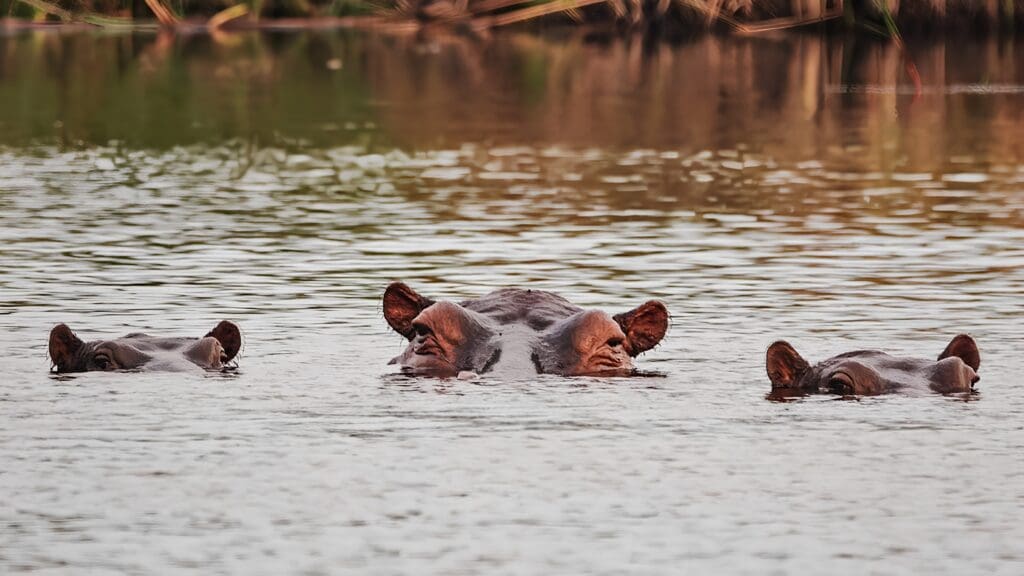
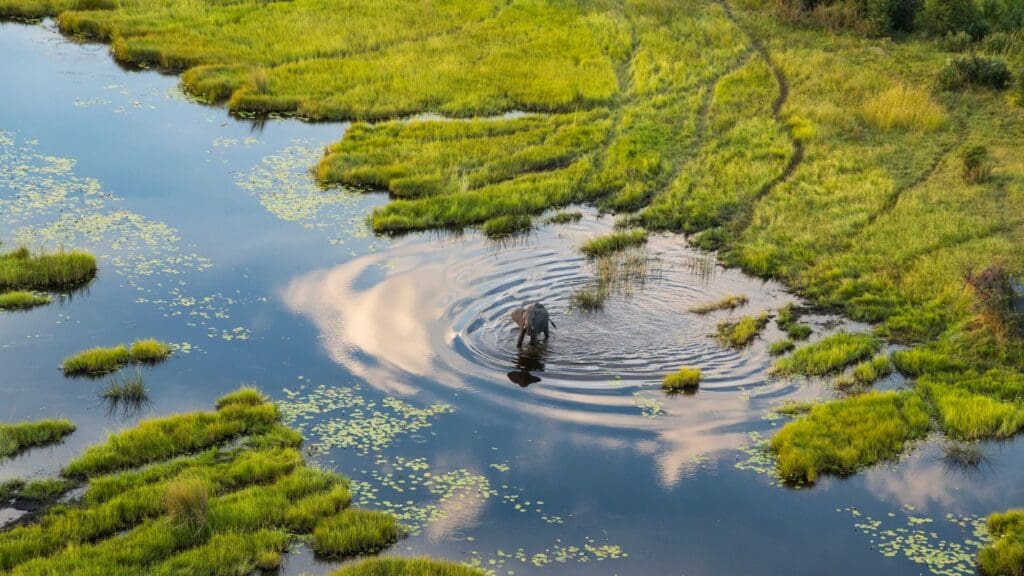
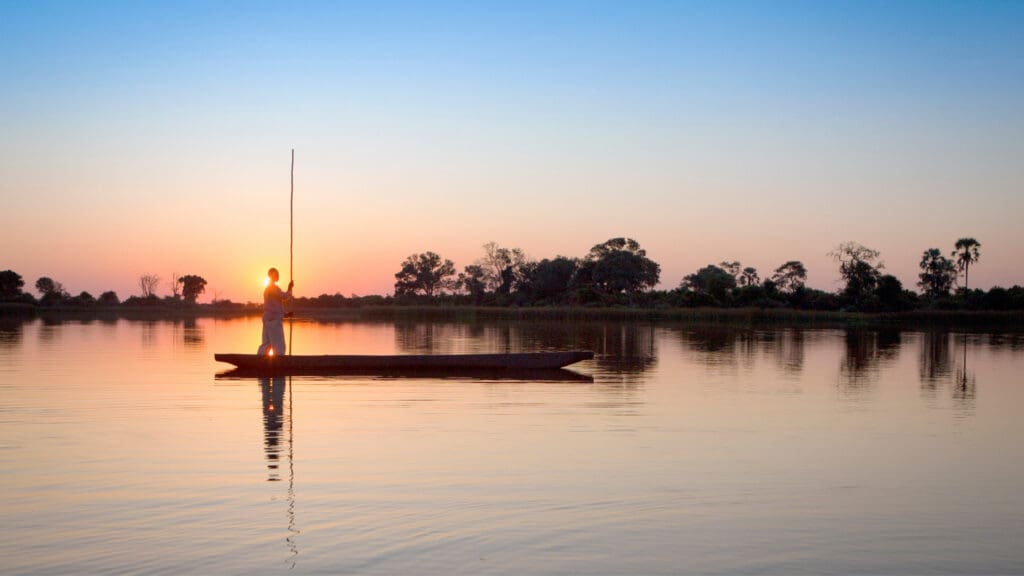
The Okavango Delta, a UNESCO World Heritage Site and one of the largest inland deltas on Earth, where seasonal floodwaters transform dry land into a glittering maze of channels, lagoons, and islands teeming with elephants, lions, hippos, crocodiles, leopards, wild dogs, and more than 400 bird species. A mokoro (traditional dugout canoe) safari through these waterways is unlike any game drive in Africa. The perspective is low, the silence is profound, and the wildlife approaches without the disturbance of an engine.
The Okavango Delta, a UNESCO World Heritage Site and one of the largest inland deltas on Earth, where seasonal floodwaters transform dry land into a glittering maze of channels, lagoons, and islands teeming with elephants, lions, hippos, crocodiles, leopards, wild dogs, and more than 400 bird species. A mokoro (traditional dugout canoe) safari through these waterways is unlike any game drive in Africa. The perspective is low, the silence is profound, and the wildlife approaches without the disturbance of an engine.
What makes Botswana’s approach to conservation so distinct is its deliberate restraint. The country built its tourism model on a simple premise: fewer visitors, higher value, greater ecological benefit. Limited access means less pressure on wildlife and more revenue per visit directed toward habitat protection and community wellbeing. The Okavango Delta is one of the few places in Africa where you feel genuinely far from the world, because intentional policy has kept it that way.
The Okavango Delta is one of the only major river systems on Earth that flows away from the ocean. It creates a pulsing inland oasis in the middle of one of the world’s great deserts, and its seasonal flood cycle, driven by rainfall hundreds of miles away in Angola, determines the rhythm of life for every species within it.
Supporting the work:
The National Geographic Okavango Wilderness Project works across Angola, Namibia, and Botswana to secure permanent, sustainable protection for the entire Okavango River Basin, combining scientific research, community partnerships, and long-form storytelling to build the political and public will that conservation requires.
MANITOBA, CANADA
Polar Bear Expedition in Churchill
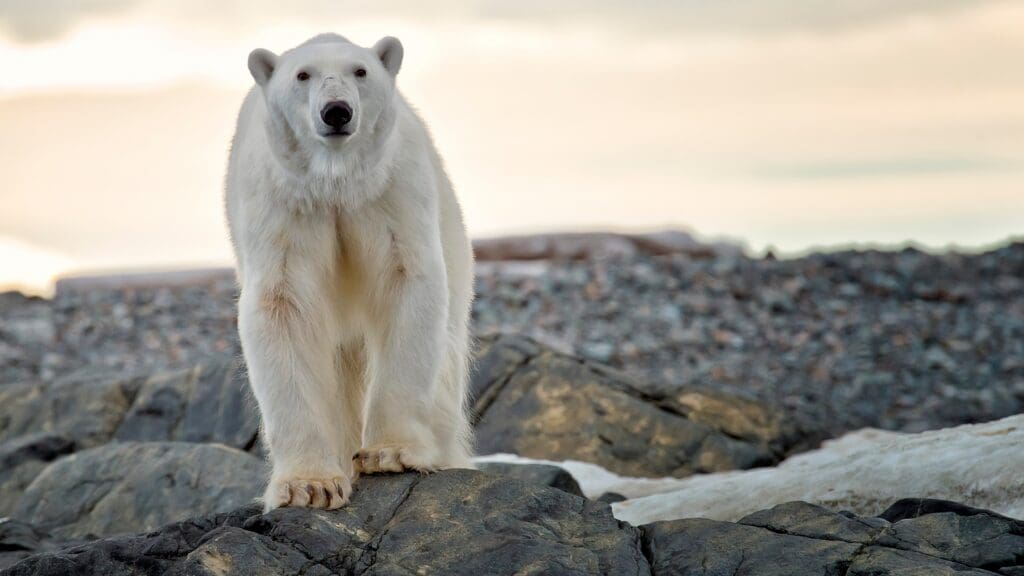
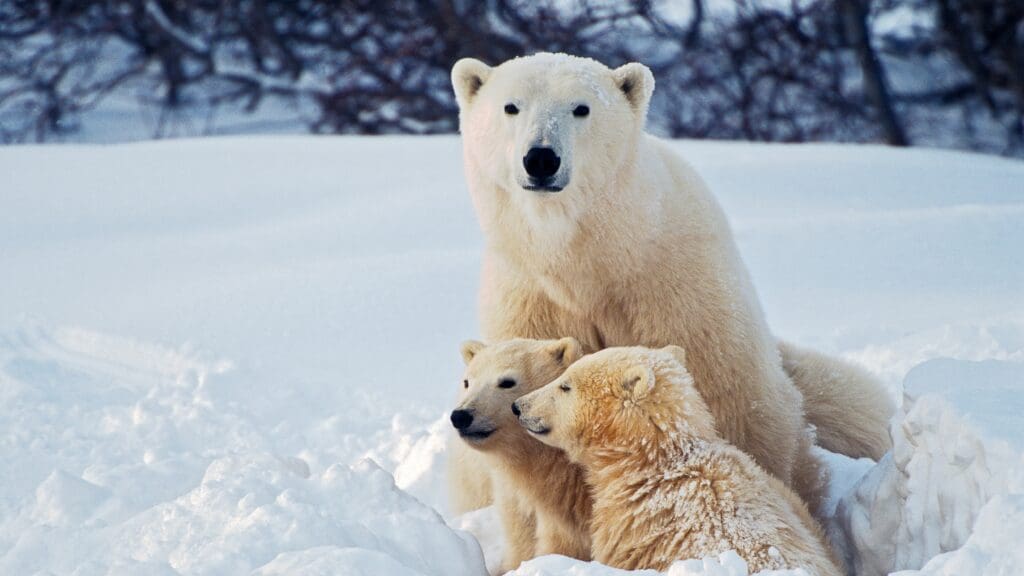
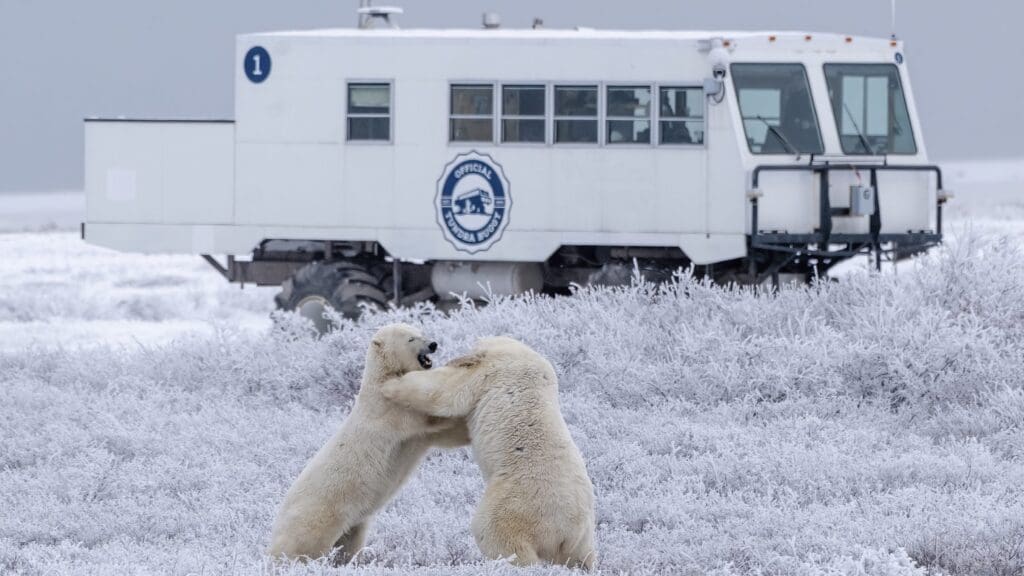
Every autumn, hundreds of polar bears gather along the western shore of Hudson Bay near Churchill, Manitoba. For a few extraordinary weeks, this small subarctic town becomes the polar bear capital of the world, and specially designed tundra vehicles allow visitors to move quietly through the landscape and observe these animals at rest, at play, sparring with each other, or simply waiting, patient and massive, at the edge of the bay. The experience is unlike any other polar encounter on Earth.
Every autumn, hundreds of polar bears gather along the western shore of Hudson Bay near Churchill, Manitoba. For a few extraordinary weeks, this small subarctic town becomes the polar bear capital of the world, and specially designed tundra vehicles allow visitors to move quietly through the landscape and observe these animals at rest, at play, sparring with each other, or simply waiting, patient and massive, at the edge of the bay. The experience is unlike any other polar encounter on Earth.
These are wild bears in their own territory, encountered at their own pace. What distinguishes Churchill’s ethical expedition model is the careful thought behind every logistical decision. Tundra vehicles are open-air or windowed, purpose-built to minimize noise and disruption while keeping guests safe without barriers that detach the experience from the wild. Operators here take the educational component seriously: Churchill’s polar bear season is not just a spectacle; it is a front-row view of what climate change looks like in real time. This Western Hudson Bay subpopulation is under significant pressure from a warming Arctic and earlier ice melt, and responsible operators ensure every guest understands what they are witnessing.
The fur of polar bears is not actually white. Each strand is transparent and hollow, scattering light in a way that makes them appear white or cream-colored. Beneath the fur, their skin is black, absorbing heat from the sun.
Supporting the work:
Polar Bears International, based in Churchill, operates the Polar Bears International House and conducts the field research, public education, and policy advocacy that makes them the world’s leading voice for polar bear conservation. Their work connects visitors directly to the science and urgency behind what they are seeing.
THE KALAHARI DESERT, SOUTHERN AFRICA
Desert Safari
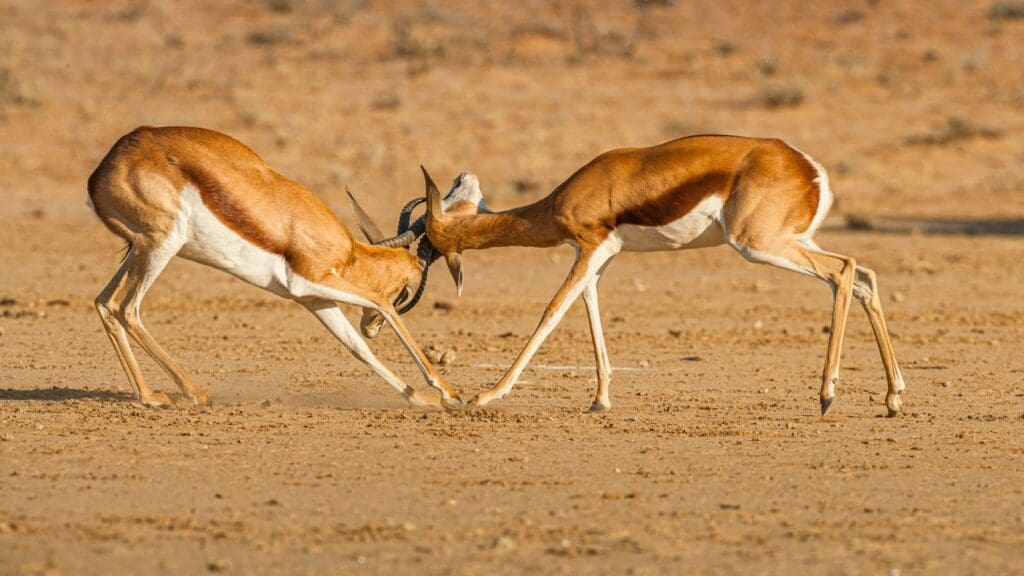
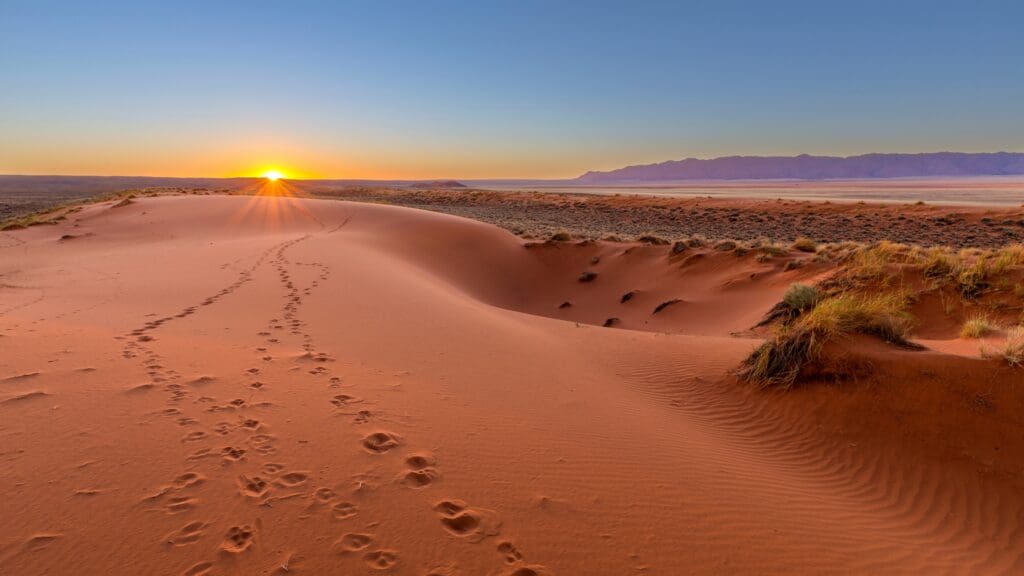
The Kalahari is technically not a desert at all. Unlike the Sahara or the Namib, the Kalahari receives between 200 and 500 millimeters of rainfall annually, enough to support vast grasslands, scattered woodland, and an ecosystem rich enough to sustain all three of Africa’s big cats: the lion, the leopard, and the cheetah. What sets the Kalahari apart from every other major African safari destination is the combination of solitude, predator density, and the extraordinary adaptation of its wildlife.
The Kalahari is technically not a desert at all. Unlike the Sahara or the Namib, the Kalahari receives between 200 and 500 millimeters of rainfall annually, enough to support vast grasslands, scattered woodland, and an ecosystem rich enough to sustain all three of Africa’s big cats: the lion, the leopard, and the cheetah. What sets the Kalahari apart from every other major African safari destination is the combination of solitude, predator density, and the extraordinary adaptation of its wildlife.
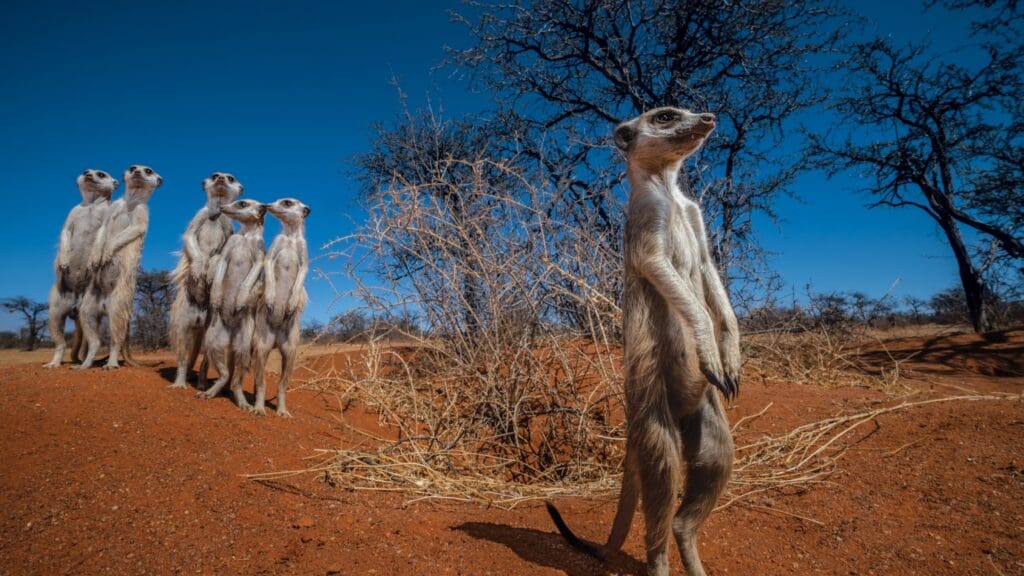
The black-maned Kalahari lion is larger and darker than its East African counterpart, evolved for hunting in open terrain. The brown hyena, the world’s rarest hyena species, thrives here in numbers found nowhere else. Cheetahs find the open landscape ideal for their speed. Meerkats emerge from their burrows at sunrise and stand sentinel in the first light, watchful and precise. A safari here is a layered experience: wildlife, landscape, and culture woven together across one of the most intact desert ecosystems left on the continent.
The name Kalahari comes from the Tswana word “kgala,” meaning “the great thirst.” Despite receiving rainfall, the sand absorbs water almost instantly, leaving no surface water and creating the paradox of a fertile, wildlife-rich landscape that is perpetually dry underfoot.
Supporting the work:
The Tswalu Foundation supports long-term ecological research across the southern Kalahari, partnering with scientists and institutions across Africa to study and protect species including the desert black rhino, brown hyena, cheetah, and the elusive Temminck’s pangolin, one of the world’s most trafficked animals.
KANGAROO ISLAND, AUSTRALIA
Kangaroos in the Wild
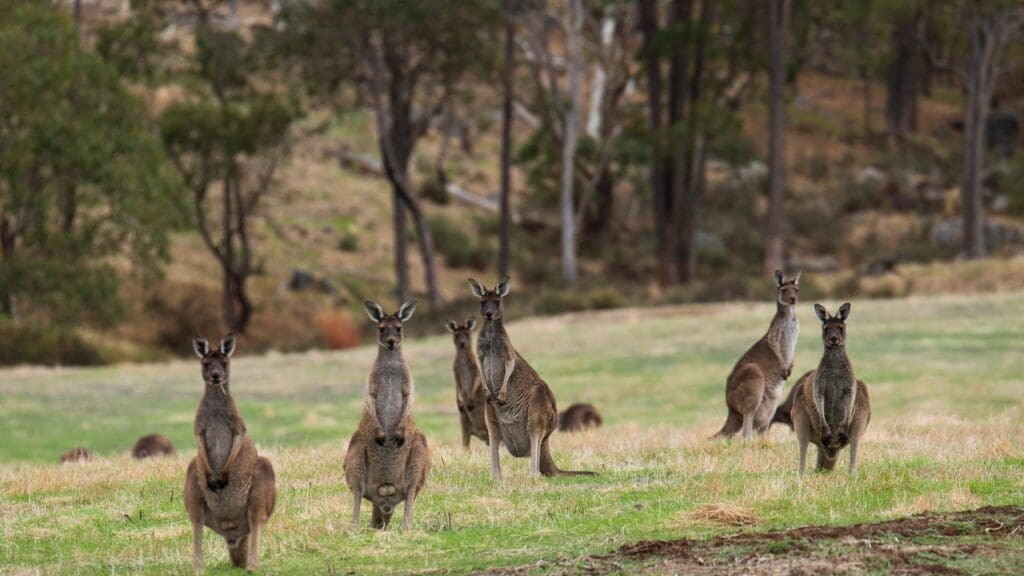
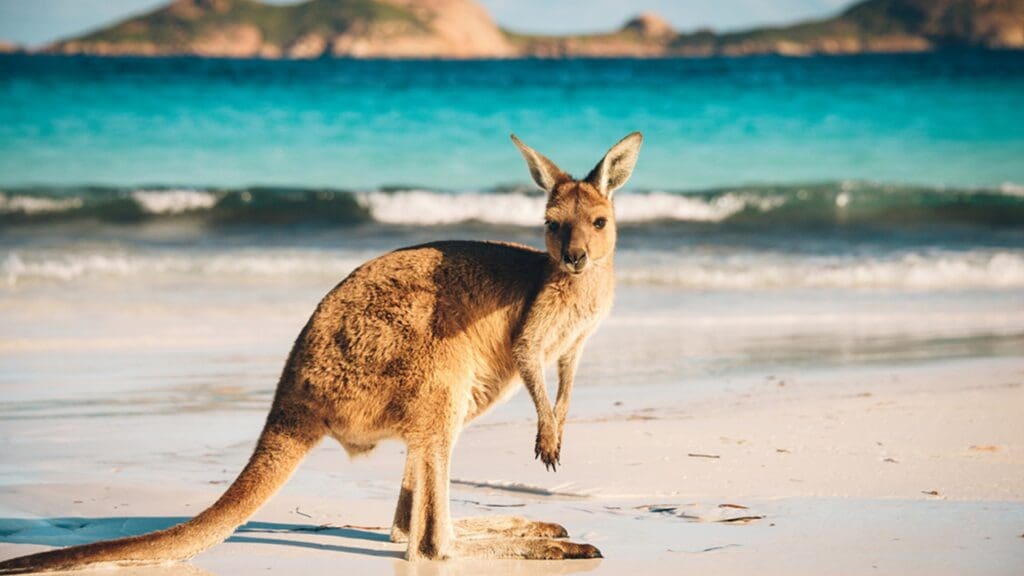
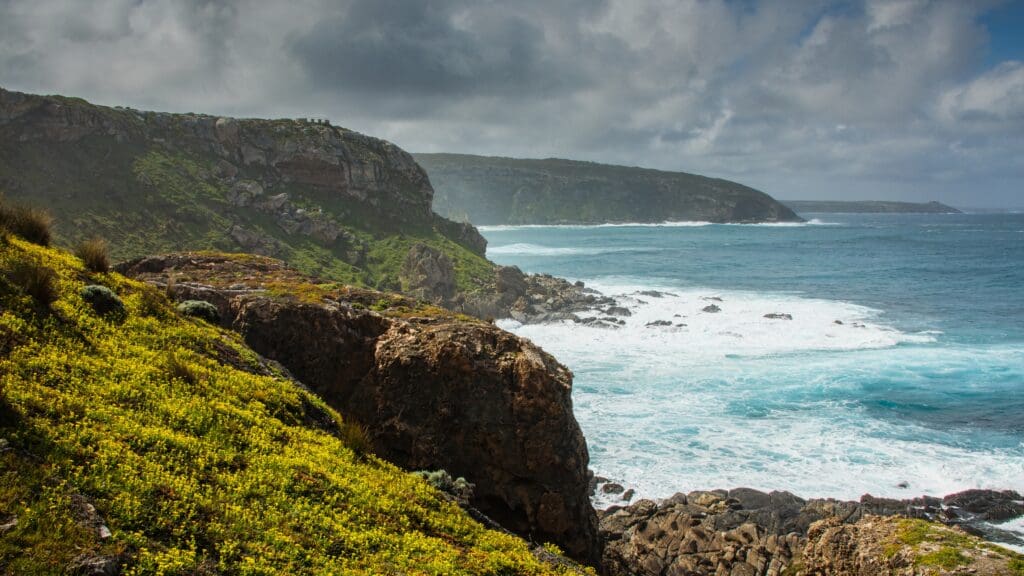
Kangaroo Island sits off Australia’s southern coast, separated from the mainland long enough that its wildlife evolved in remarkable isolation. The result is a concentration of wild animals that is genuinely unusual even by Australian standards: kangaroos moving through open fields at dusk, koalas in the forks of eucalyptus trees, sea lions hauling themselves onto deserted beaches, and echidnas nosing through the undergrowth with no particular concern for your presence.
Kangaroo Island sits off Australia’s southern coast, separated from the mainland long enough that its wildlife evolved in remarkable isolation. The result is a concentration of wild animals that is genuinely unusual even by Australian standards: kangaroos moving through open fields at dusk, koalas in the forks of eucalyptus trees, sea lions hauling themselves onto deserted beaches, and echidnas nosing through the undergrowth with no particular concern for your presence.
It is one of the few places in the world where you can observe kangaroos behaving entirely naturally in their native habitat, far removed from the managed environments and feeding stations that define most wildlife encounters on the mainland.
Kangaroos are the only large mammals on Earth that use hopping as their primary mode of locomotion. Remarkably, hopping becomes more efficient the faster they go: at high speeds, their tendons act like springs, returning energy with each bound and actually reducing the energy cost of movement. A large male red kangaroo can cover 9 meters in a single leap.
Supporting the work:
The Kangaroo Island Wildlife Network, a volunteer-run nonprofit, has been rescuing and rehabilitating injured and orphaned wildlife since the fires. The Australian Wildlife Conservancy’s Western River Refuge on the island now provides predator-free sanctuary for the Kangaroo Island Dunnart and other critically endangered species, representing one of the most significant conservation investments in the region’s history.
THE GALÁPAGOS, ECUADOR
Tortoises, Marine Iguanas & Blue-Footed Boobies
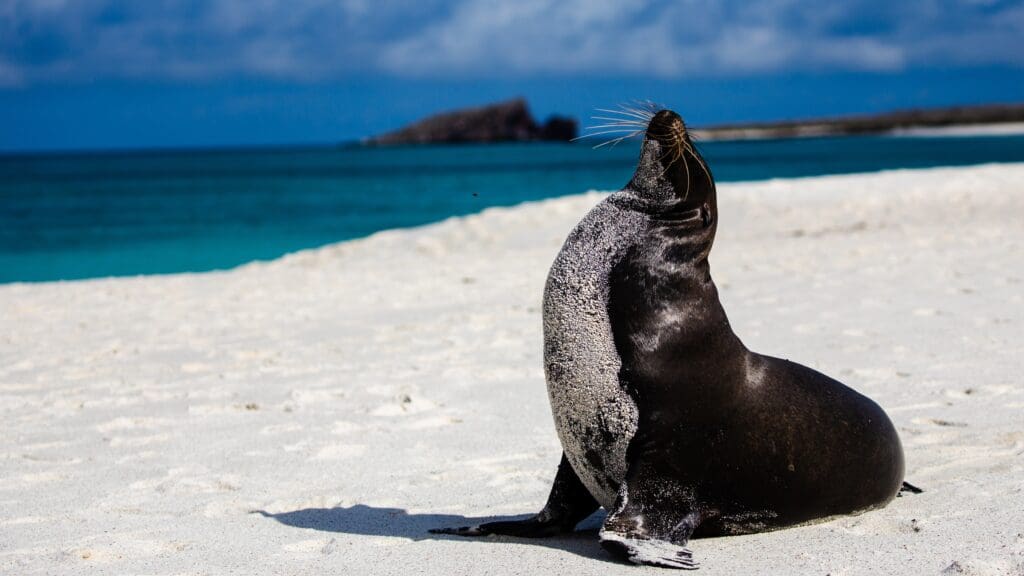
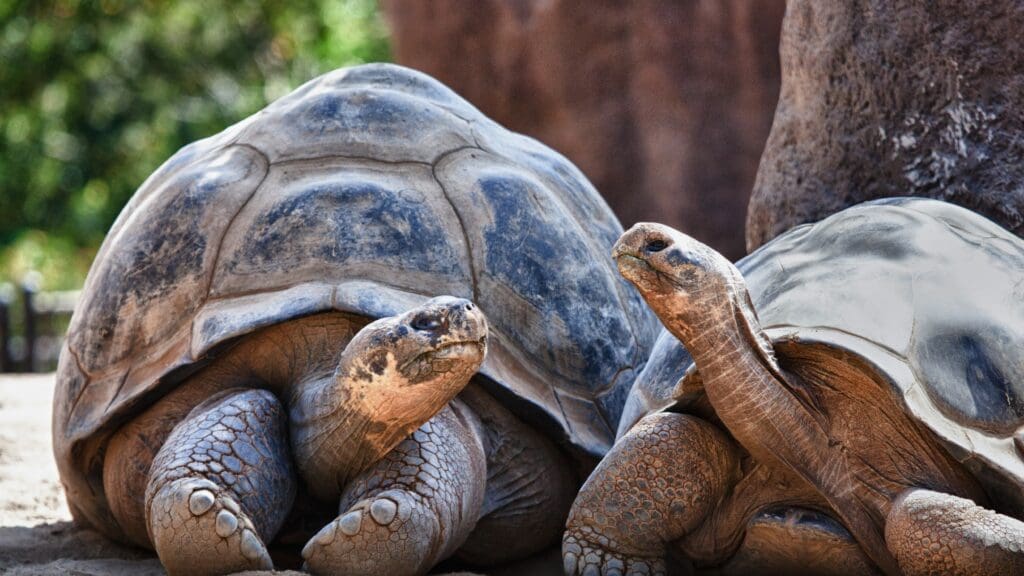
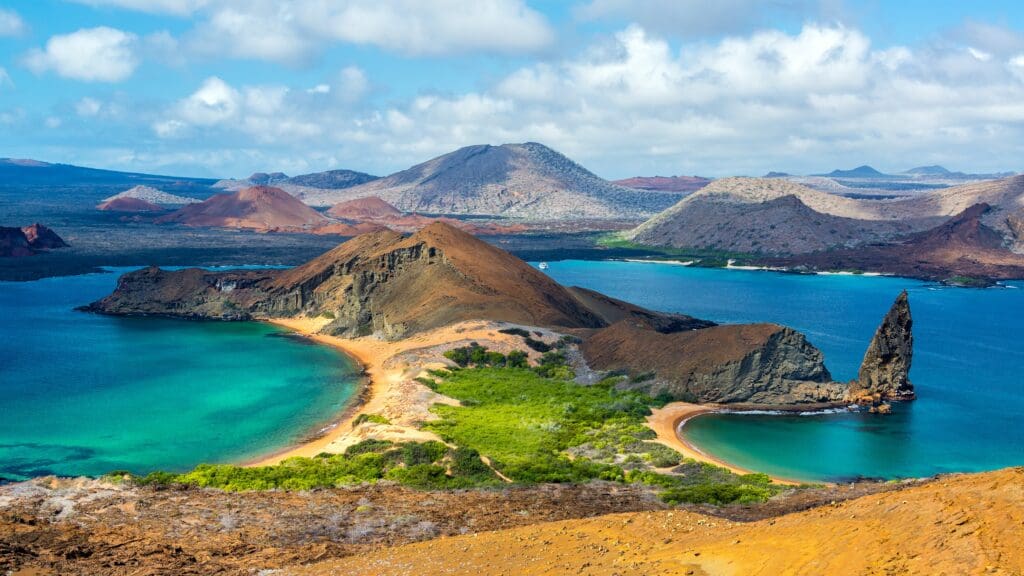
Charles Darwin arrived in the Galápagos in 1835 and left with the beginnings of a theory that would change how we understand life on Earth. The animals here evolved without land predators, which means they never learned to fear human beings, and they still haven’t. The Galápagos National Park manages all of this with extraordinary care.
Charles Darwin arrived in the Galápagos in 1835 and left with the beginnings of a theory that would change how we understand life on Earth. The animals here evolved without land predators, which means they never learned to fear human beings, and they still haven’t. The Galápagos National Park manages all of this with extraordinary care.
Licensed naturalist guides accompany every group. Designated paths protect fragile habitats. Visitor numbers are strictly capped by island zone. The permit system, the guide requirements, and the scientific infrastructure behind them exist because this ecosystem is not self-sustaining in the presence of humans; it has been fought for, island by island and species by species, over generations of conservation work. Every permit purchased contributes directly to that work.
Marine iguanas are the only lizards in the world that feed in the ocean, diving to depths of 30 feet to graze on algae. They sneeze salt from specialized glands near their nose to regulate their body chemistry after a dive.
Supporting the work:
Galápagos Conservancy leads the Iniciativa Galápagos in partnership with the Galápagos National Park Directorate. Since 2019, the initiative has reintroduced over 3,000 land iguanas to Santiago Island, where they had been absent for more than 150 years, and documented pink iguana hatchlings for the first time in recorded history. It is one of the most ambitious rewilding efforts on the planet.
THE FLORIDA EVERGLADES, U.S
America’s Wild Backyard
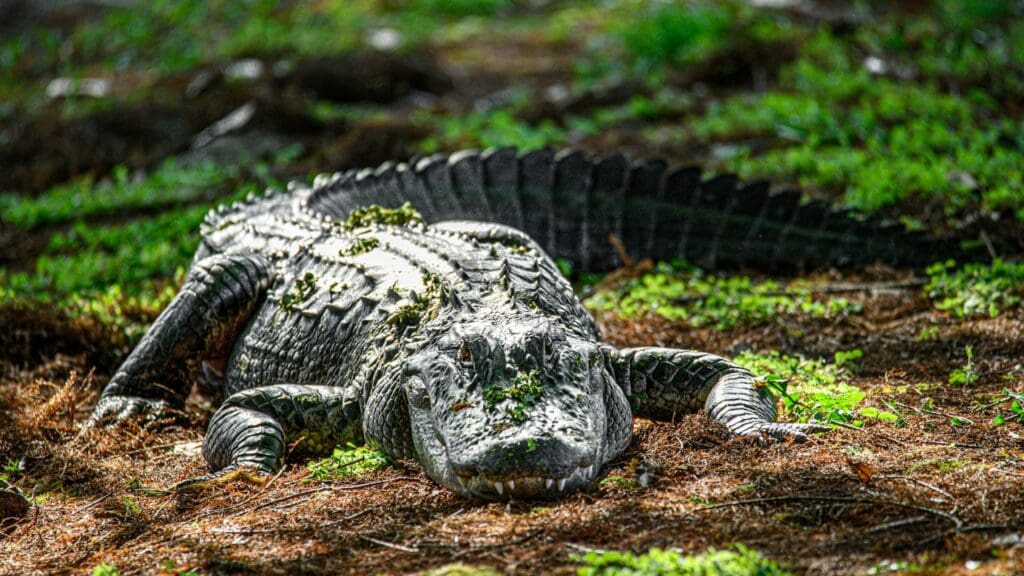
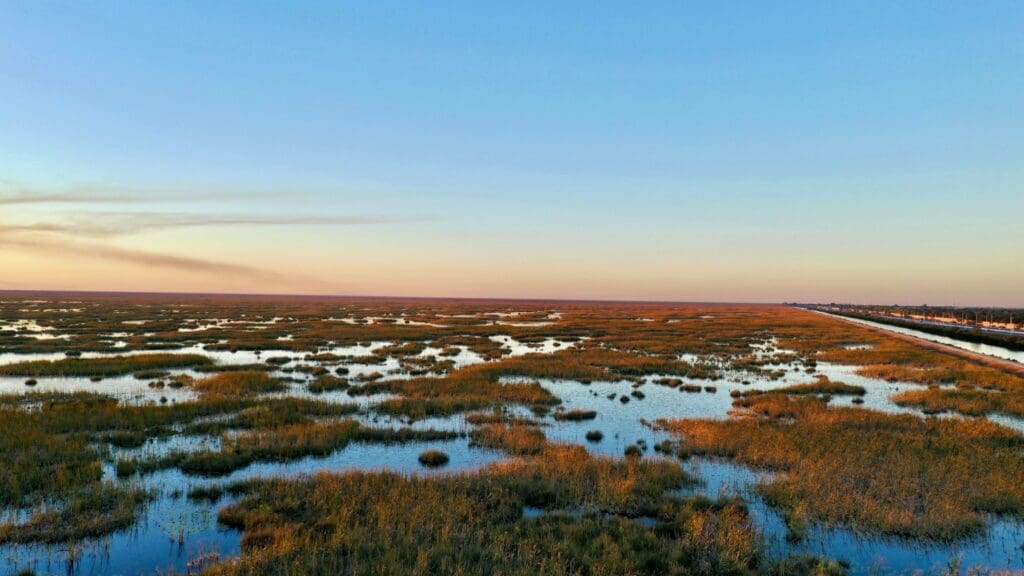
The Florida Everglades represents one of North America’s most singular wildlife experiences and one of its most urgent conservation stories. The Everglades is not a swamp. It is a slow-moving river of grass nearly 100 miles wide, a subtropical wilderness that supports alligators, American crocodiles (one of the only places in the world where both species coexist), roseate spoonbills, manatees, the elusive Florida panther, and hundreds of bird species that use its wetlands as critical habitat along the Atlantic flyway.
The Florida Everglades represents one of North America’s most singular wildlife experiences and one of its most urgent conservation stories. The Everglades is not a swamp. It is a slow-moving river of grass nearly 100 miles wide, a subtropical wilderness that supports alligators, American crocodiles (one of the only places in the world where both species coexist), roseate spoonbills, manatees, the elusive Florida panther, and hundreds of bird species that use its wetlands as critical habitat along the Atlantic flyway.
An airboat or kayak tour through the sawgrass is a deeply immersive experience, one that feels genuinely wild despite being a short drive from Miami. Visiting, and choosing operators who contribute to that effort, is one of the most meaningful things a traveler can do.
The Everglades is the only place in the world where alligators and crocodiles naturally coexist. The Florida panther, one of the most endangered mammals in North America, has a wild population estimated at fewer than 250 individuals, all of them living in southern Florida.
Supporting the work:
Friends of the Everglades, founded by conservationist and author Marjory Stoneman Douglas, has advocated for this ecosystem for generations. Their mission is simple and unchanged: preserve, protect, and restore the only Everglades in the world.
KHAO SOK, THAILAND
Elephant Hills, Khao Sok National Park
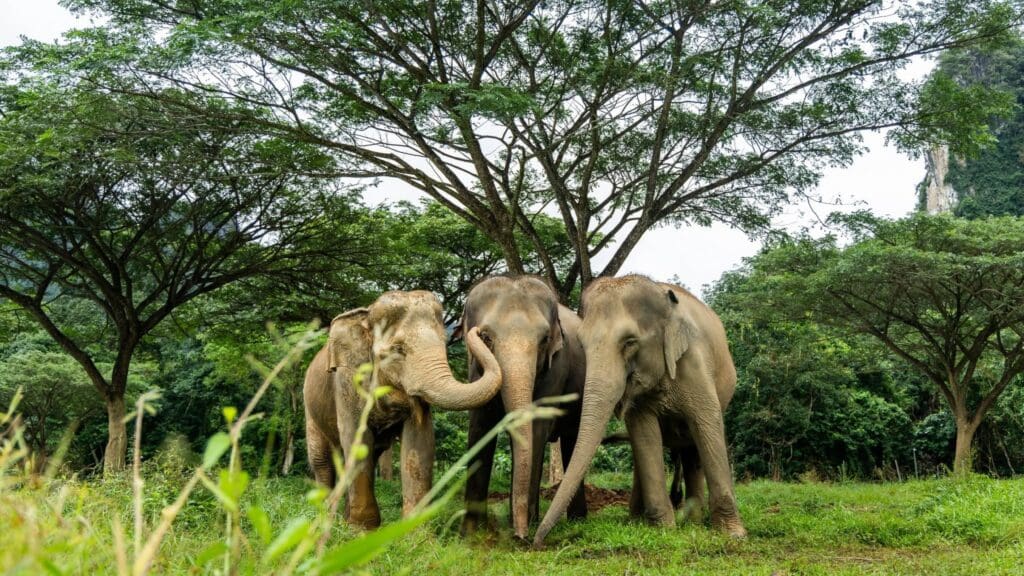
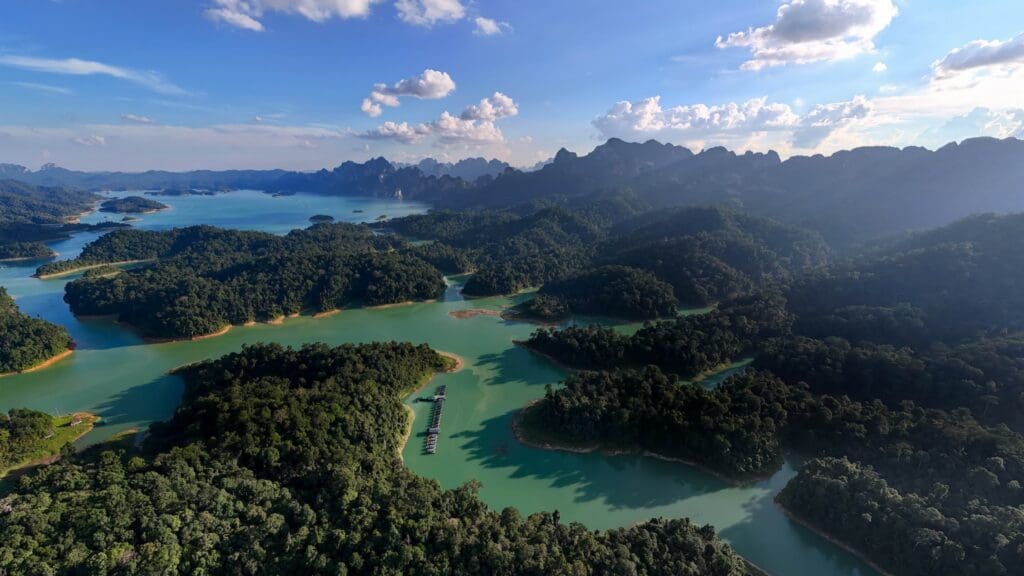
There are no wild elephants left to observe freely in Thailand. Centuries of habitat loss and the country’s long history of working elephants have made truly wild encounters impossible, which makes understanding how to see these animals ethically more important here than anywhere else. Elephant Hills, set within Khao Sok National Park in southern Thailand, has built its experience around a single, unwavering principle: the elephants come first.
There are no wild elephants left to observe freely in Thailand. Centuries of habitat loss and the country’s long history of working elephants have made truly wild encounters impossible, which makes understanding how to see these animals ethically more important here than anywhere else. Elephant Hills, set within Khao Sok National Park in southern Thailand, has built its experience around a single, unwavering principle: the elephants come first.
There is no riding, no performing, no unnatural contact, and no hooks or chains. Guests observe the herd as they forage, bathe, and move through their habitat at their own pace, accompanied by mahouts who have worked with these specific animals for years and know their personalities, preferences, and histories.
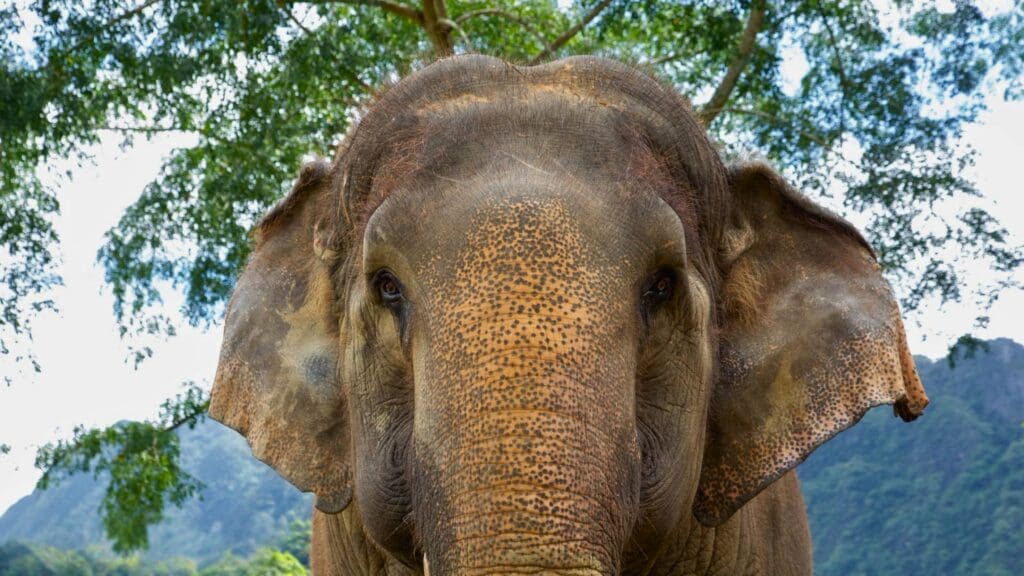
Asian elephants demonstrate self-awareness, mourn their dead, use tools, and communicate through a range of vocalizations, including infrasound, frequencies too low for humans to hear that can travel several kilometers through the ground.
Supporting the work:
Elephant Hills received a 100% rating from the independent Animals in Tourism audit conducted by Global Spirit, the first animal attraction anywhere in the world to achieve that score within the two-week audit period. That distinction matters because not all elephant tourism is equal, and the difference between an ethical operation and a harmful one is not always obvious to a first-time visitor. The animals in the care of ethical camps like this one were often rescued from logging work, street begging, or poorly run trekking operations. What they have now is a life lived largely on their own terms, with humans present as respectful guests rather than handlers.
LIMÓN PROVINCE, COSTA RICA
Sloths Sanctuary
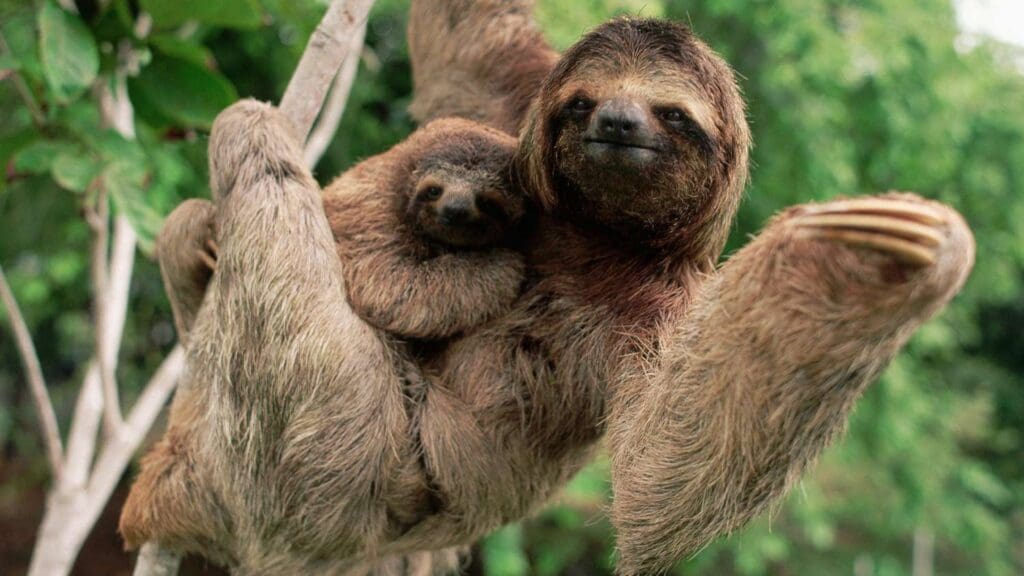
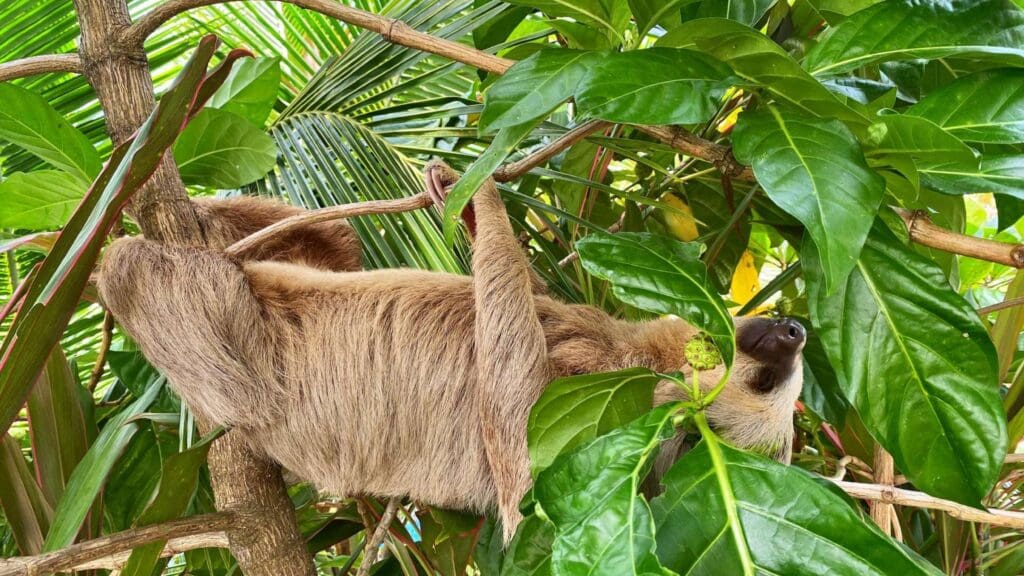
On the Caribbean coast of Costa Rica, tucked within a 320-acre tropical lowland rainforest reserve, sits the world’s first and only facility dedicated exclusively to the rescue, rehabilitation, research, and release of sloths. The Sloth Sanctuary began not as a grand conservation plan but as an act of kindness: in 1992, three neighboring children brought founders Judy Avey-Arroyo and Luis Arroyo a tiny orphaned baby sloth whose mother had been struck by a car.
On the Caribbean coast of Costa Rica, tucked within a 320-acre tropical lowland rainforest reserve, sits the world’s first and only facility dedicated exclusively to the rescue, rehabilitation, research, and release of sloths. The Sloth Sanctuary began not as a grand conservation plan but as an act of kindness: in 1992, three neighboring children brought founders Judy Avey-Arroyo and Luis Arroyo a tiny orphaned baby sloth whose mother had been struck by a car.
They named her Buttercup, and in caring for her, discovered that almost nothing was known about sloth biology or rehabilitation. What makes this experience unlike any other wildlife encounter is its intimacy and its honesty. Visitors do not simply observe sloths from a distance; they learn the individual stories behind each resident, why they arrived, what recovery looks like, and which ones are being prepared for release. No touching is permitted. When handled by unfamiliar people, sloths can experience tachycardia, an abnormally rapid heart rate that weakens the heart muscle over time and can cause premature death. The sanctuary’s approach places animal wellbeing above the visitor experience at every turn, and the result is a deeper, more meaningful encounter precisely because of those limits.
Despite their reputation for slowness, sloths are surprisingly strong swimmers, using their long limbs to cross rivers with ease.
Supporting The Work:
The Sloth Sanctuary of Costa Rica manages the rescue and rehabilitation operation and remains the world’s primary center for sloth research. The Sloth Institute Costa Rica, a separate nonprofit operating nearby, focuses specifically on preparing orphaned and injured sloths for full release back into the wild, running a multifaceted program that spans rescue, rehabilitation, scientific research, and community education.